

The Bailey Library Murals
Art, History & Community in Winthrop, Maine
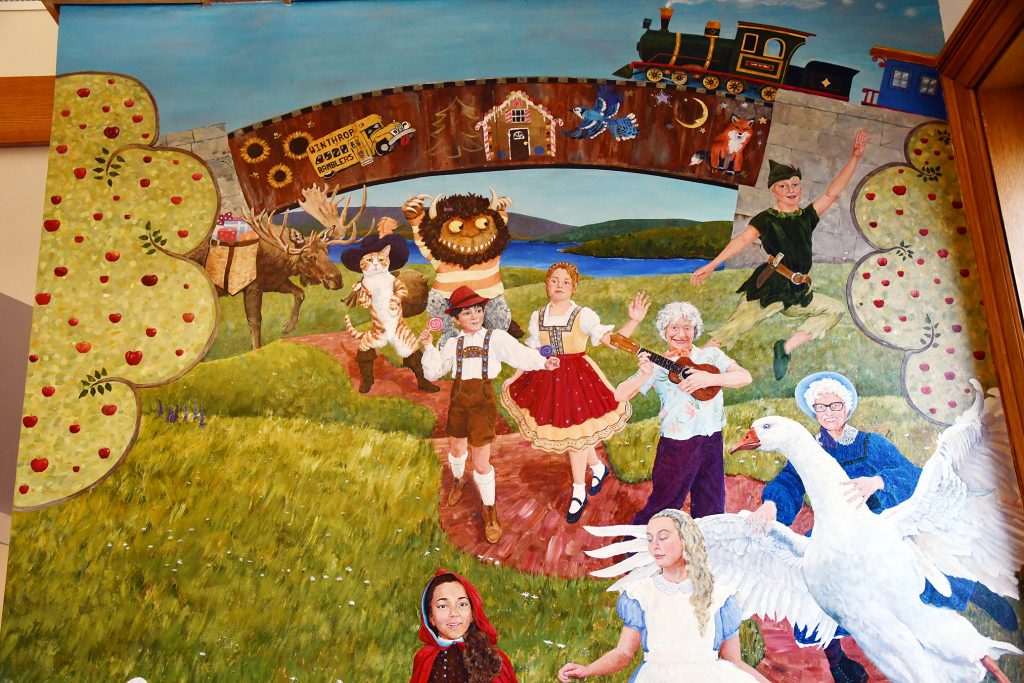
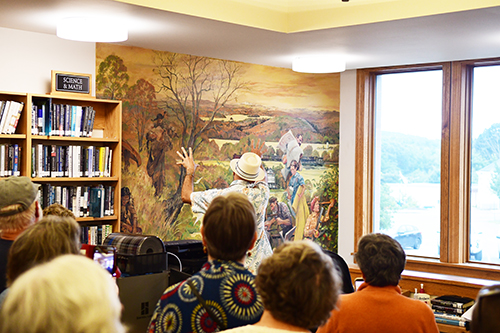
The Bailey Library Murals celebrate the history, culture, and traditions of Winthrop, Maine. Developed as companion projects by Library Director Richard Fortin, each was created independently by a Maine artist for a distinct area of the library. Chris Cart’s Winthrop History Mural presents the town’s history through its people, landscape, industry, transportation, literature, and civic life. The Children’s Mural, by painter and muralist Jen Greta Cart, brings together children’s literature, local authors, landmarks, music, and community traditions in an imaginative view of Winthrop. Chris Cart is a nationally recognized illustrator and muralist; Jen Greta Cart is known for paintings and public murals drawing upon magical realism and the relationship between the imaginative and physical worlds. The murals were created in 2026 with support from the Winthrop Public Library Foundation, Friends of the Library, Library Board of Trustees, the estate of Marie Cecile Stone, memorial gifts honoring Mary Jane Auns, and members of the Winthrop community.
Winthrop History Mural Guide
A Guide to the Mural in the Adult Wing of the Bailey Library
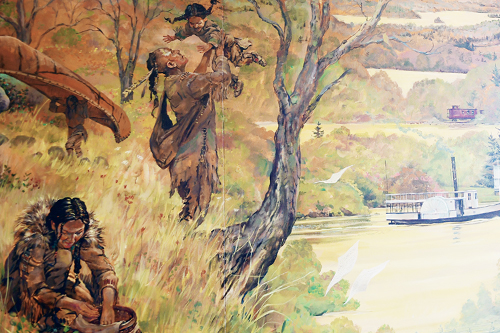
Abenaki Family
The Abenaki, members of the Wabanaki Confederacy, lived in this region for thousands of years. They sustained their communities through hunting, fishing, farming, and basket making. Following European contact, epidemics devastated the population. During and after King Philip’s War, many Native people displaced from southern New England joined Abenaki communities. By the end of the American Revolution, the total Abenaki population had fallen to fewer than 1,000 people.
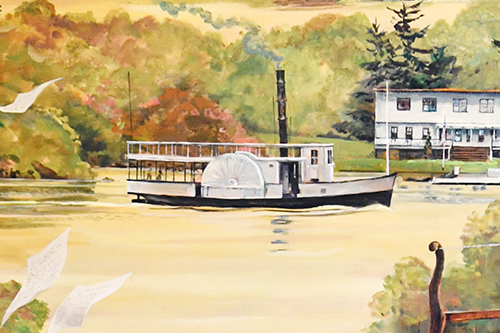
Steamboat on Maranacook Lake
During the late nineteenth and early twentieth centuries, steamboats carried visitors around Maranacook Lake, connecting hotels, cottages, and lakeside destinations. Together with the Maine Central Railroad, they helped shape Winthrop’s resort industry.
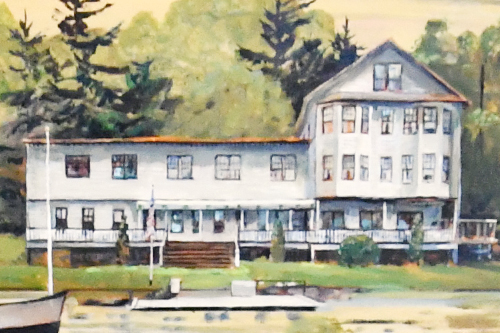
Maranacook Lodge
Constructed by the Maine Central Railroad, the Maranacook Lodge anchored a growing lakeside resort community. Together with rail service and lake steamers, it reflected the growth of tourism throughout the surrounding lakes.
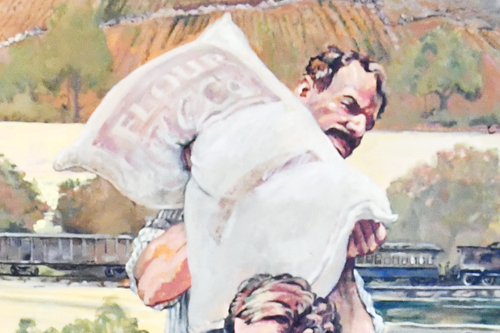
Early Gristmill
The man carrying a flour sack represents Winthrop’s early gristmill. At the outlet of Maranacook Lake, settler John Chandler built a sawmill in 1768, followed soon after by a gristmill. Powered by the waters of Maranacook Stream, these mills supplied lumber and ground grain for the growing settlement.
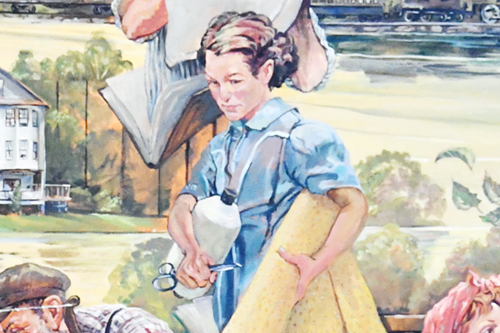
Textile Mill Worker
The woman carrying a bolt of fabric represents the thousands of workers whose labor made the Winthrop Mills Company the economic heart of the community for nearly 150 years. Founded in 1866, the company became the nation’s largest manufacturer of woolen blankets and one of Maine’s last operating woolen mills.
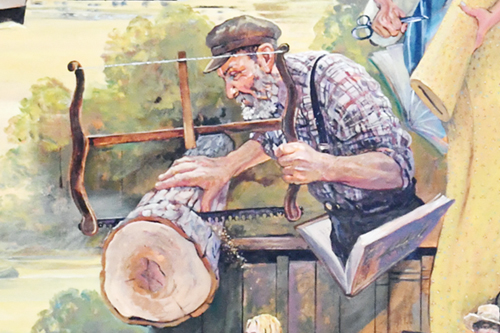
Lumberman
This lumberman represents generations of loggers whose work supported one of Winthrop’s earliest industries. Beginning with John Chandler’s sawmill in 1768, timber from the surrounding forests helped build the growing community. By 1886, the sawmill produced about 200,000 feet of lumber each year.
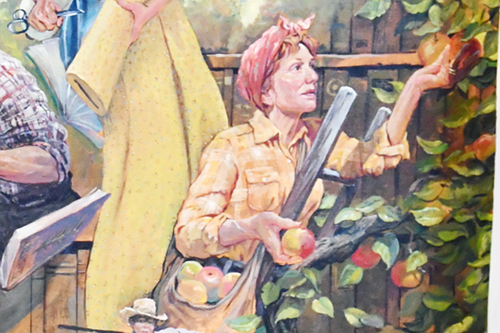
Woman Picking Apples
This woman gathering apples represents Winthrop’s rich orchard tradition. Known as “Apple Valley,” the town’s apple growing history began in 1768 when early settler Ichabod Howe planted its first orchards. One of his seedlings became the famous Winthrop Greening, a variety still preserved today.
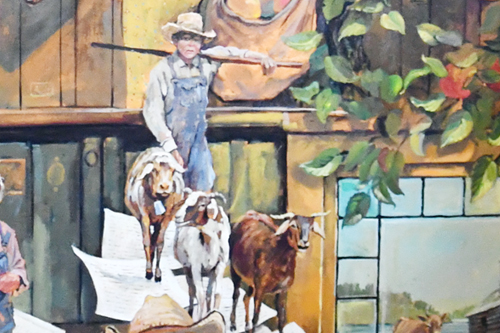
Boy Herding Goats and Cattle
This young herdsman represents the generations of families whose farms supported the growing community. During the nineteenth century, Winthrop became known for its orchards and dairy farms, including some of Maine’s earliest Jersey cattle.
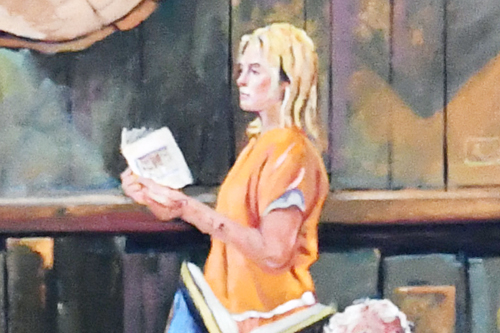
Character Inspired by How to Read a Book
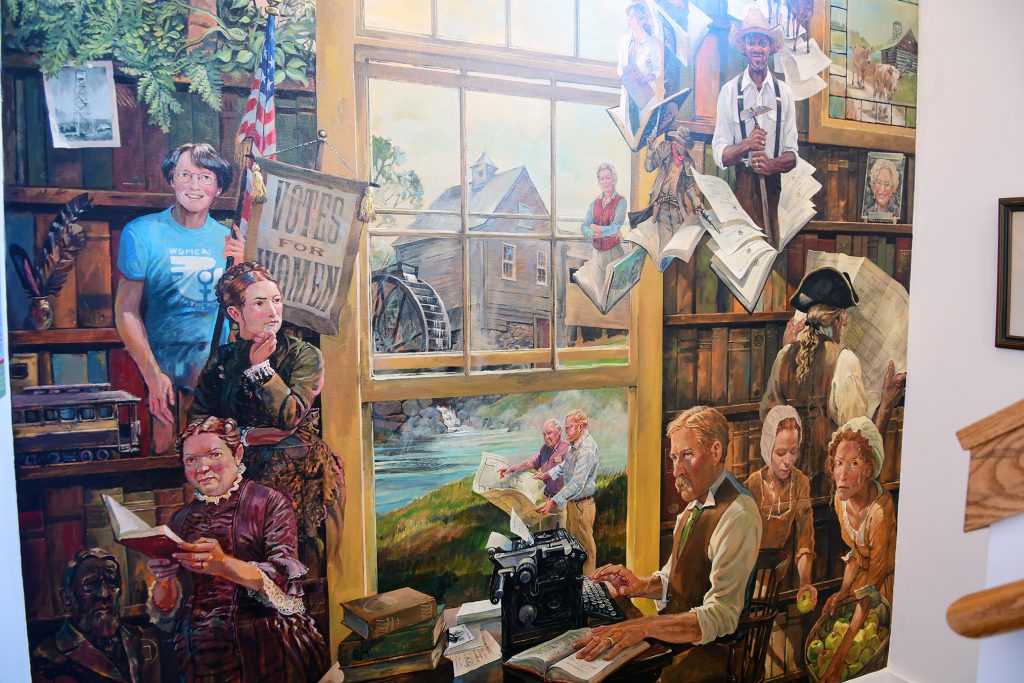
This figure represents a character inspired by Monica Wood’s novel How to Read a Book. Maine author Monica Wood’s books explore the people, relationships, and resilience of life in Maine’s mill towns and small communities. She has shared her work with audiences at the Bailey Public Library.
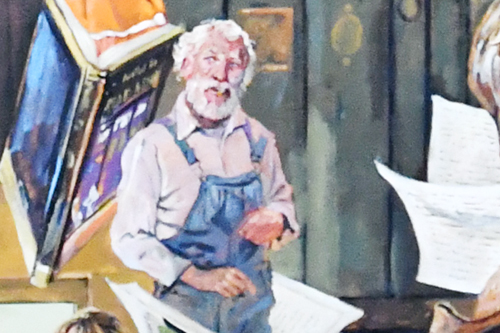
Max Roby from Empire Falls
Created by Pulitzer Prize-winning novelist Richard Russo, Max Roby represents the unforgettable characters who populate Maine’s small towns. Russo’s work captures the humor, struggles, and enduring spirit of rural New England.
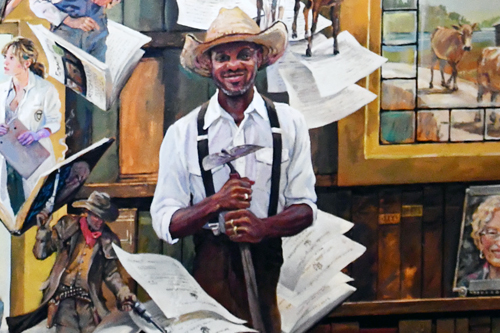
Senator Craig Hickman
Senator Craig Hickman is shown with several of his legislative bills, representing his work in the Maine Legislature. A writer, farmer, and advocate, he championed policies supporting agriculture, civil rights, environmental stewardship, and stronger communities across Maine.
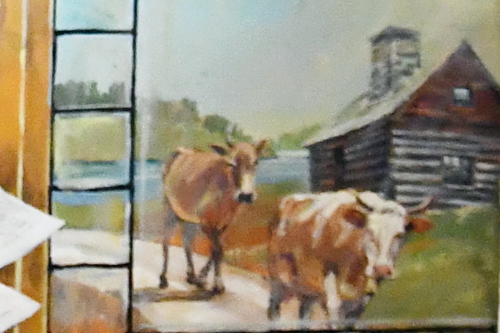
Timothy Foster Family Cabin
Seen through the small window is the Foster family’s original cabin, representing Winthrop’s earliest permanent settlement. The Jersey cattle also acknowledge the farming families whose work shaped the community for generations.
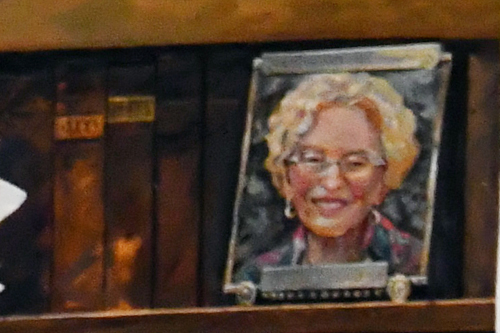
Marion L. Healey (1926 to 2013)
Displayed on the bookshelf is a photograph of Marion L. Healey, a longtime Winthrop community leader and founder of the Winthrop Area Federal Credit Union. She managed the credit union for forty years. A devoted patron of the Bailey Public Library, she also served on the library’s fundraising committee.
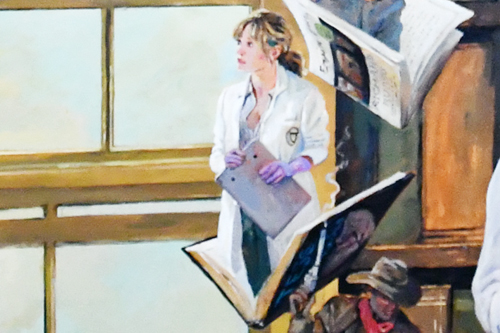
Character Inspired by the Works of Tess Gerritsen
This figure represents a character inspired by the novels of Maine author Tess Gerritsen. Her medical thrillers and mysteries have been translated into more than 40 languages. Gerritsen also shared her work with audiences at the Bailey Public Library.
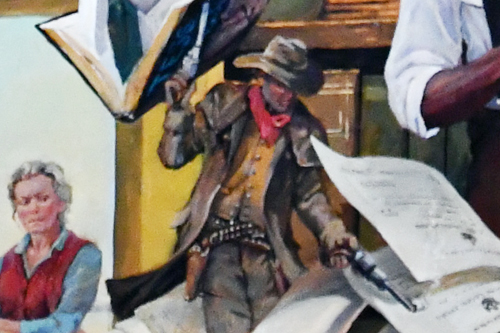
The Gunslinger
This iconic character from Stephen King’s The Dark Tower series represents one of Maine’s best-known authors. King supported the Bailey Public Library’s 2015 expansion and has sold hundreds of millions of books worldwide.
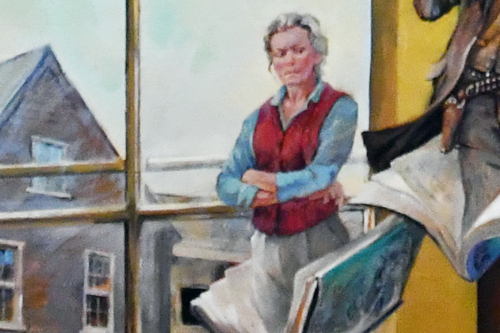
Olive Kitteridge
Elizabeth Strout’s Pulitzer Prize-winning character reflects the strength, complexity, and resilience found in Maine’s people and communities. Strout’s novels are rooted in the landscapes and small towns of Maine.
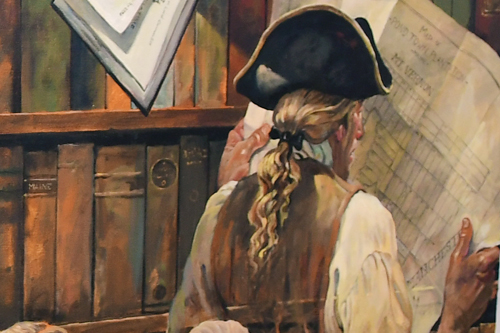
Timothy Foster (1720 to 1785)
Captain Timothy Foster studies an early map of Pondtown, the settlement that would become Winthrop. As one of the community’s earliest leaders, he helped guide its growth during the colonial period.
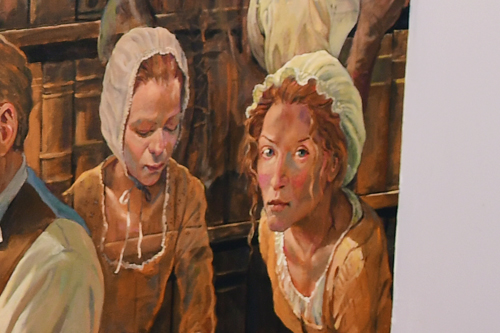
Timothy Foster Family
Depicted with Captain Timothy Foster are his wife and one of their children, representing the families whose hard work established homes, cultivated the land, and helped build the community. The basket of Winthrop Greening apples symbolizes Winthrop’s rich agricultural heritage.
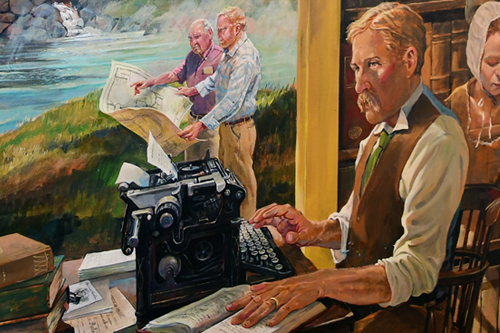
Everett S. Stackpole (1850 to 1927)
Historian Everett S. Stackpole preserved Winthrop’s history through his landmark 1925 town history, a work that continues to guide local historians.
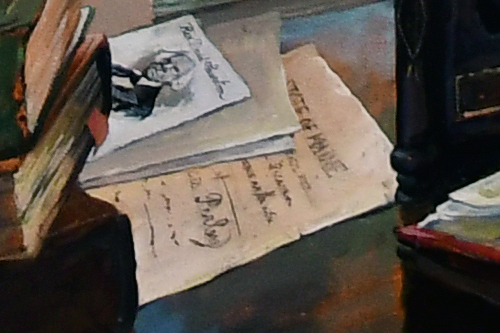
Rev. David Thurston (1779 to 1865)
Displayed on the desk is a photograph of Rev. David Thurston, Winthrop’s longtime Congregational minister, historian, and abolitionist. During more than four decades of ministry, he wrote one of the earliest histories of Winthrop and became an outspoken opponent of slavery, a position that ultimately led to his dismissal.
Francis Perley (1822 to 1903)
This historical document represents Winthrop native Francis Perley, an early abolitionist whose commitment to ending slavery reflected the growing movement for freedom and equality in nineteenth century Maine.
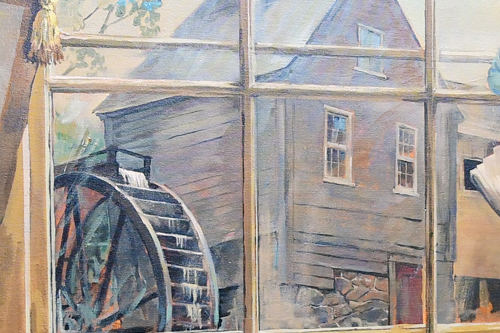
Mill on Maranacook Stream
Visible through the central window is the mill on Maranacook Stream, whose waters powered Winthrop’s industrial growth for generations. From early sawmills and gristmills to the nationally recognized Winthrop Mills Company, the stream shaped the town’s economy and daily life.
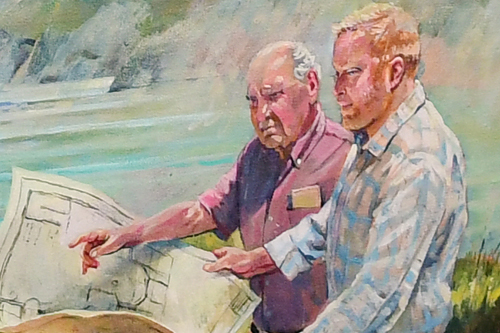
Library Expansion
Seen through the window are Library Director Richard Fortin and architect Phil Locashio reviewing plans for the library’s 2015 expansion. The project fulfilled a vision first proposed in the 1960s, expanding the library to serve future generations.
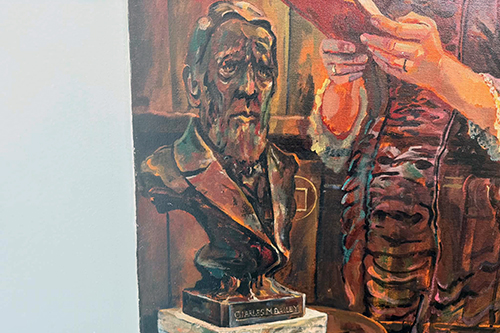
Charles M. Bailey (1820 to 1917)
The bronze bust honors Charles M. Bailey, the library’s namesake. A businessman, philanthropist, and Quaker leader, Bailey owned one of America’s largest oilcloth manufacturing companies and played an important role in Winthrop’s economic and civic life.
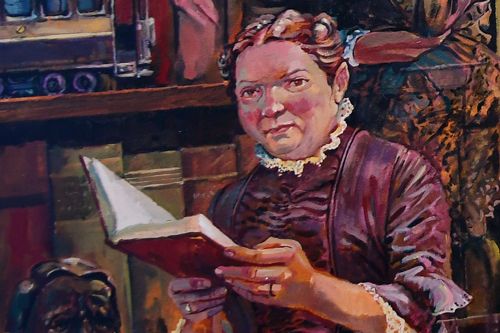
Emily Fairbanks Talbot (1834 to 1900)
Born in Winthrop, Emily Fairbanks Talbot was a teacher, philanthropist, and advocate for women’s education. In 1881, she and her daughter, Marion Talbot, founded the American Association of University Women, expanding educational and professional opportunities for generations of women.
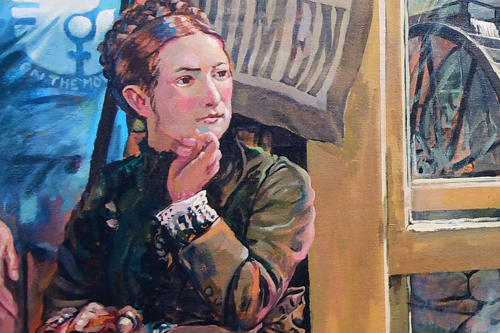
Hannah Johnston Bailey (1839 to 1923)
A Quaker educator, businesswoman, and reformer, Hannah Johnston Bailey made Winthrop her lifelong home after marrying Moses Bailey in 1868. She became a national leader in the women’s suffrage, temperance, and peace movements, advocating for voting rights, prison reform, and international peace.
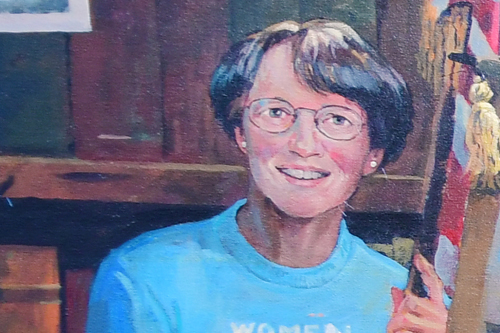
Linda Smith Dyer (1948 to 2001)
A Winthrop attorney, public servant, and advocate for equality, Linda Smith Dyer founded the Maine Women’s Lobby, advanced women’s rights in Maine, served on the first Winthrop Town Council, and was inducted into the Maine Women’s Hall of Fame in 2001.
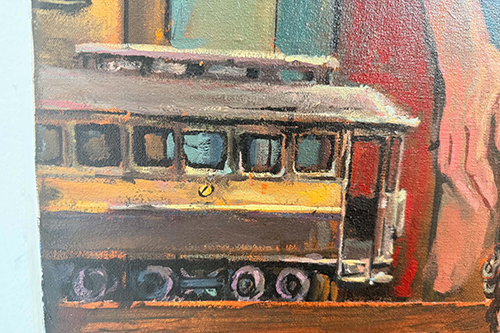
Electric Trolley
The toy trolley visible on the bookshelf represents the electric railway that connected Winthrop with Augusta, Hallowell, and Gardiner in the early 1900s. The trolley helped bring visitors to Winthrop’s lakes, resorts, and attractions, including the Maranacook Lake resort area and Island Park on Cobbossee Lake. The Winthrop branch remained in service until 1928.
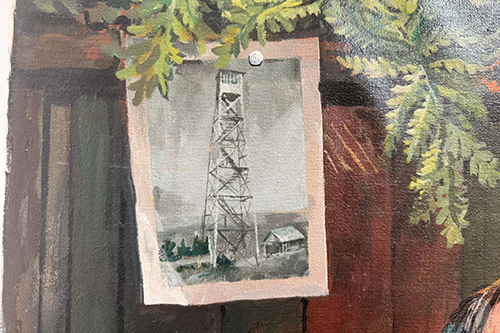
Mount Pisgah Fire Tower
The photograph pinned to the bookshelf depicts Mount Pisgah, one of Winthrop’s most recognizable natural landmarks. The surrounding lakes and waterways were part of ancient Abenaki travel routes, while later generations cleared portions of the mountain for farms and pastures. In 1949, the Maine Forest Service constructed the 60-foot fire tower at its summit to watch over the surrounding forests. Today, the mountain’s trails, old stone walls, and fire tower preserve reminders of its agricultural past and offer sweeping views of the Winthrop Lakes Region.
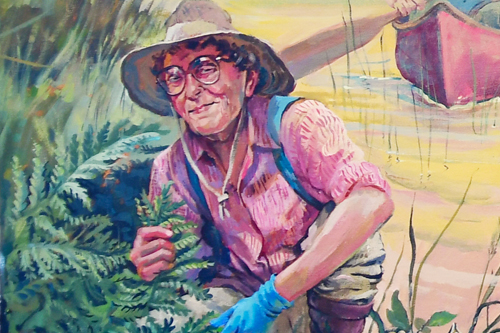
Marilyn R. N. Mollicone (1928 to 2023)
A Winthrop botanist, educator, and conservationist, Marilyn Mollicone helped found Viles Arboretum, directed the Augusta Nature Center summer camp for 19 years, and contributed to botanical research throughout her life.
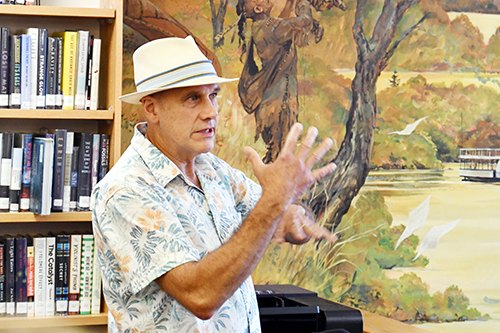
About the Artist
Chris Cart is a Maine artist, illustrator, and muralist whose work explores history, storytelling, and community. A Signature Member of the National Watercolor Society, he has illustrated more than 30 books and created public murals throughout Maine. His paintings tell the stories of Maine’s people, places, and history through carefully observed scenes from everyday life.
Project Support
This Winthrop History Mural was made possible through the generous support of the Winthrop Public Library Foundation, the Friends of the Library, the Library Board of Trustees, a bequest from the estate of Marie Cecile Stone, and numerous individual contributions from members of the Winthrop community.

Free to watch on the PBS YouTube channel!Congratulations to 'The Librarians' on the well-deserved Emmy win for Exceptional Merit in Documentary Filmmaking!
'The Librarians' is a powerful documentary that follows public and school librarians as they unite to combat book banning and defend intellectual freedom on democracy's front lines amid unprecedented censorship in Texas, Florida, and beyond.
Thank you to filmmaker Kim Snyder and all the courageous librarians and advocates who shared their stories to help shine a light on the fight for the freedom to read.
Read more: bit.ly/4gVRleC
📸 Photo courtesy of Amanda Jones

1 CommentsComment on Facebook
NEW BOOKS & MOVIES
Explore new fiction, movies, picture books,
graphic novels, and more!

UPCOMING EVENTS
STEAM Squad
Thursday, September 10 @ 4:00 PM
Bailey Ukulele
Thursday, September 10 @ 5:30 PM
Sensory Squad!
Saturday, September 12 @ 10:30 AM
Connect With Us:


Library Hours:
Closed Now

MON-WEDS: 10-6
TH: 3-8
FRI/SAT: 10-3
Location:


 Yours to explore . . . |
 Subscribe to our monthly newsletter Subscribe to our monthly newsletter |
 © 2026 C.M. Bailey Public Library |